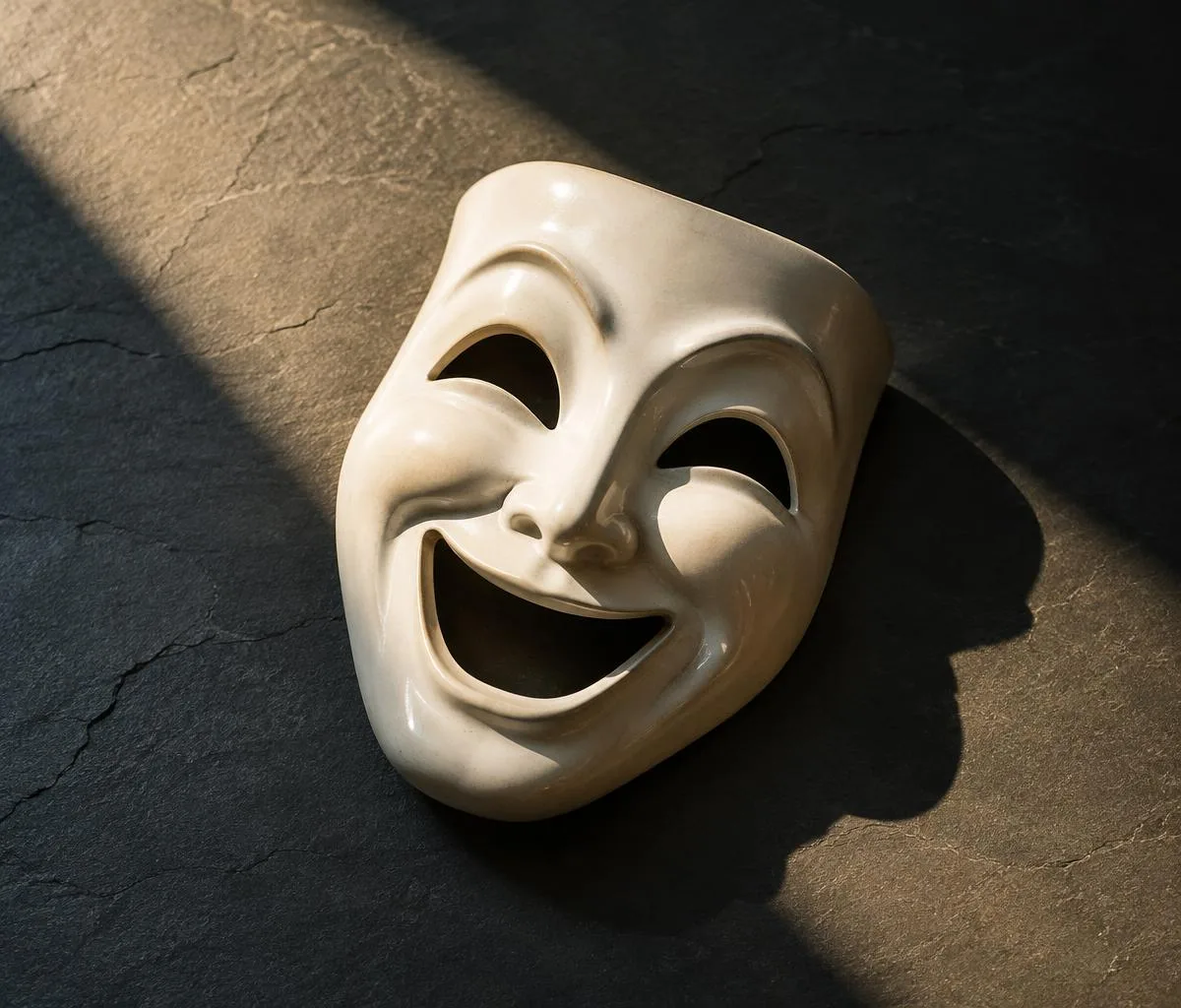
Laughter often looks like a minor accident that resolved itself in public. When somebody trips over a sentence or discovers an unexpected plastic flamingo sitting on their office chair, the first physical reaction is usually a quick intake of breath. The body tightens for a split second, assesses the territory, and then decides whether to sound an alarm or exhale into a chuckle. That brief transition from mild alarm to safety is the exact territory where well-judged pranks operate.
Most people can recall at least one practical joke that cemented a friendship, just as easily as they can recall one that ruined a Tuesday afternoon. The difference between an inside joke that lasts for eight years and an incident that requires an awkward human resources memo comes down to social calibration. Understanding the psychological mechanics behind playfulness allows people to share laughter that draws a group closer together rather than driving individuals away.
Benign violation theory simplified
To understand why a good prank creates warmth, it helps to start with the Benign Violation Theory, developed by researchers A. Peter McGraw and Caleb Warren. The theory proposes that laughter occurs when three specific conditions align: an individual perceives a situation as a violation of normal order, the situation is simultaneously interpreted as completely benign, and these two assessments happen at the exact same moment. If there is no violation, the moment is boring. If the violation is not benign, the moment creates fear, disgust, or anger.
A violation might be a breach of social norms, a physical surprise, or a minor linguistic trick. For instance, swapping a colleague's desktop wallpaper to an image of a spreadsheet made entirely of comic sans violates their expectation of visual order. It becomes benign because no files were deleted, no client saw the computer, and the fix requires exactly two mouse clicks. The brain registers the disruption, checks for actual danger, finds none, and releases the resulting tension through laughter.
When the balance tilts even slightly toward genuine harm, the benign framing collapses. A psychological appraisal of safety depends heavily on psychological distance, which operates across four primary dimensions: spatial, social, temporal, and hypothetical.
| Dimension |
Benign Appraisal Example |
Harmful Violation Example |
| Social Distance |
Teasing a sibling about their stubborn habit of microwaving cereal milk. |
Teasing a new contractor on their first afternoon about their speech pattern. |
| Spatial Distance |
Watching a video of someone slipping on dry grass in another city. |
Placing an oily substance near a walkway where someone can genuinely fall. |
| Temporal Distance |
Laughing about an absurd camping trip mishap that happened three summers ago. |
Joking about a catastrophic presentation five minutes after it concluded. |
| Severity Level |
Hiding someone's favourite pen behind their computer monitor. |
Hiding someone's prescription glasses or car keys before an off-site meeting. |
When someone feels physically secure and socially valued, their threshold for what counts as benign expands. Conversely, if a person feels isolated or exhausted, almost any breach of their daily routine registers as an unwelcome intrusion. The prankster must accurately guess how the other person will evaluate the event in the first two seconds, which is why close acquaintances manage this far better than strangers.
How mutual playfulness fosters group trust
From an evolutionary perspective, play is how mammals rehearse dangerous activities without suffering fatal consequences. Wolf pups bite each other with regulated force to test boundaries and learn coordination; humans trade verbal barbs and physical surprises to test social stability. Anthropologist Robin Dunbar has noted that social laughter triggers an endorphin release, acting as an efficient form of grooming for groups larger than four or five individuals.
When two people share the relief that follows a harmless surprise, they establish a shared secret. Imagine a small team that works through a grueling financial audit. On the final afternoon, one analyst replaces the team leader's pen collection with exact replicas made of edible marzipan. When the leader tries to write notes and ends up with almond paste on their fingers, the immediate confusion yields to collective laughter. The act signals that despite the tight deadlines, the environment remains safe enough for absurdity.
This process builds trust through three distinct social mechanisms:
- Demonstrated restraint: The person executing the joke proves that they had the access and capability to cause genuine frustration, but deliberately chose an outcome that caused zero damage.
- Shared vulnerability: The recipient allows themselves to be seen in an unscripted, startled state, while the instigator risks temporary social disapproval if the execution falls flat.
- Affiliation verification: Successfully resolving the surprise acts as an unspoken confirmation that both parties share the same cultural and situational context.
Surveys conducted across corporate teams often show that groups with high psychological safety engage in frequent, light-hearted ribbing. In a 2018 study observing collaborative engineering pods, teams that engaged in spontaneous micro-humour roughly four times per hour reported a 23 percent higher willingness to ask for technical assistance compared to teams that maintained rigid decorum. The playful disruption continually proves that small mistakes will not lead to social banishment.
The risk factors: status, hierarchy, and context
The social physics of humour change entirely when power enters the room. In an ideal world, playfulness flows freely in every direction. In reality, power imbalances alter how safe a violation feels to the person receiving it. When a senior manager pranks an entry-level clerk, the clerk does not have the practical freedom to display annoyance or decline participation.
This power asymmetry creates forced laughter, which serves as a submissive social gesture rather than a bond-building exercise. A junior worker might grin outwardly while internally calculating whether their reaction could impact their upcoming performance review. For this reason, benevolent pranksters follow an established social rule: punch up or punch laterally, but exercise extreme caution when punching down.
Consider the four structural variables that dictate the risk level of any prank:
- Hierarchical distance: A prank between two people on the same pay grade and team carries significantly lower risk than one between a department head and an intern.
- Audience size: Surprising someone in an empty kitchen allows them to react privately. Doing so during an all-hands video call with 42 people turns an intimate joke into public performance art, heightening the recipient's anxiety.
- Baseline stress: If the target has slept four hours, has a sick child, or is working toward a firm deadline, their emotional capacity to process a benign violation drops toward zero.
- Subject matter: Jokes that focus on external props, absurd logic, or inanimate objects carry low risk. Jokes that touch on appearance, competency, family, or health carry high risk.
Context also depends heavily on timing. A harmless prank on a quiet Friday afternoon creates a welcome distraction. The same prank executed on a Monday morning when the server has gone down looks like indifference to other people's responsibilities. If you need a calendar reminder to ensure your timing does not ruin someone's schedule, you probably already know the timing is risky.
Reading non-verbal signals after the punchline
The most critical window of any playful interaction occurs during the five seconds immediately following the reveal. A skilled communicator does not watch their own handiwork; they watch the target's face, neck, and posture. Learning to differentiate authentic amusement from polite compliance protects relationships from accumulating hidden resentment.
An authentic reaction involves the Duchenne smile, characterized by the involuntary contraction of both the zygomatic major muscle (raising the corners of the mouth) and the orbicularis oculi muscle (crinkling the outer corners of the eyes). When someone genuinely enjoys the surprise, their shoulders drop, their breath leaves their chest in an audible sigh or laugh, and their torso leans slightly toward the instigator within three to four seconds.
Polite or defensive reactions look markedly different, even if the person smiles:
- Mouth-only smiles: The lips pull wide and flat, but the skin around the eyes remains static. This demonstrates social obedience rather than amusement.
- Micro-stiffening: The recipient's chin pulls back toward their neck, their arms cross tightly, or their fingers tap a surface rapidly. These are classic self-soothing behaviors indicating nervous system arousal.
- Immediate subject changes: If the person offers a short chuckle and instantly redirects their attention back to a screen or paperwork, they are closing the interaction down as fast as possible.
- Prolonged silence before speech: A delay of more than three seconds before words arrive often signals that the person is actively filtering their initial frustration to remain civil.
If you observe two or more of these defensive cues, the correct response is not to say, "Come on, it was just a joke." That response invalidates their appraisal and compounds the social error. The only appropriate response is a brisk, non-defensive restoration of order: reset the altered item immediately, offer a brief, sincere apology without drawing further attention, and return to ordinary communication.
Practical takeaways for everyday communicators
If you want to use playfulness to build rapport in a workplace, family, or volunteer group, you need an operational framework. High-trust communicators treat harmless pranks like delicate seasoning: a very small dash brings out the flavor of the group, while half a bottle ruins the entire meal.
Follow these specific parameters when planning a moment of shared absurdity:
- Target the environment, never the person: Shift inanimate surroundings rather than altering personal possessions that carry emotional or financial value. Moving a potted plant three inches to the left every morning for two weeks is intriguing. Hiding someone's wallet or phone creates genuine anxiety until the moment of resolution.
- Ensure the reset time is under 60 seconds: A good prank should never require significant labor from the recipient. If they have to spend 20 minutes scrubbing tape residue off their desk or cleaning glitter out of their keyboard, you have not gifted them a laugh; you have assigned them unpaid chores.
- Make yourself the fool where possible: Self-deprecating pranks carry almost no social risk. For instance, wearing an absurdly formal tuxedo to an informal team lunch because you claimed you misunderstood the dress code invites everyone else to share a laugh at your expense.
- Keep the mystery short: The space between the confusion and the reveal should ideally last between 2 and 15 seconds. If someone spends two hours wondering whether their project was canceled or if their car was towed, the physiological stress response produces daily balance that completely overrides any eventual relief.
Humour functions best when it affirms that the group is observant, capable of spontaneous joy, and deeply protective of each member's comfort. When executed with precision, a small absurd gesture tells your peers that the environment is human, resilient, and safe enough for a brief moment of silliness.
Even well-intentioned people frequently miscalculate playfulness. The most common error is assuming that personal history with someone gives an absolute pass to ignore context. A childhood friend may enjoy intense banter at a Saturday barbecue, but targeting them with a public practical joke in their corporate office risks undermining their professional identity in front of colleagues who do not know the backstory.
Another frequent mistake is confusing annoyance with amusement. If an action causes an eye-roll followed by a genuine smile, the violation was benign. If it causes an eye-roll followed by silence, the instigator has simply committed an act of low-level friction. Repeating low-level friction under the guise of being playful is a reliable way to make people avoid you in hallways.
Finally, avoid pranks that involve artificial scarcity or existential threats. Faking an email about canceled benefits, fabricated layoffs, or invented structural emergencies never reads as benign, regardless of how quickly the disclosure follows. If a prank relies on exploiting a person's fundamental anxieties about their livelihood or safety, it is not craft; it is carelessness.
Next steps for testing playful humour
Before introducing practical jokes or heightened teasing to a new group, test the waters using progressive calibration. Begin by introducing observational, harmless absurdity into ordinary conversation. Comment on an unusual item in the room, share a mildly self-deprecating anecdote from your weekend, or introduce a light verbal paradox during a break.
Observe how group members react to these small departures from strict business communication. If the group leans in, reciprocates with their own stories, and relaxes their posture, you have confirmed that the social baseline can support more playful interaction. If they respond with perfunctory nods and immediate pivots back to rigid agendas, respect that boundary. Playfulness cannot be enforced; it must be offered as an invitation that others feel entirely free to decline.
All scenarios are provided for lighthearted entertainment only: always verify venue rules and consider participant comfort before staging any practical joke. Disclaimer
 Merrysmith